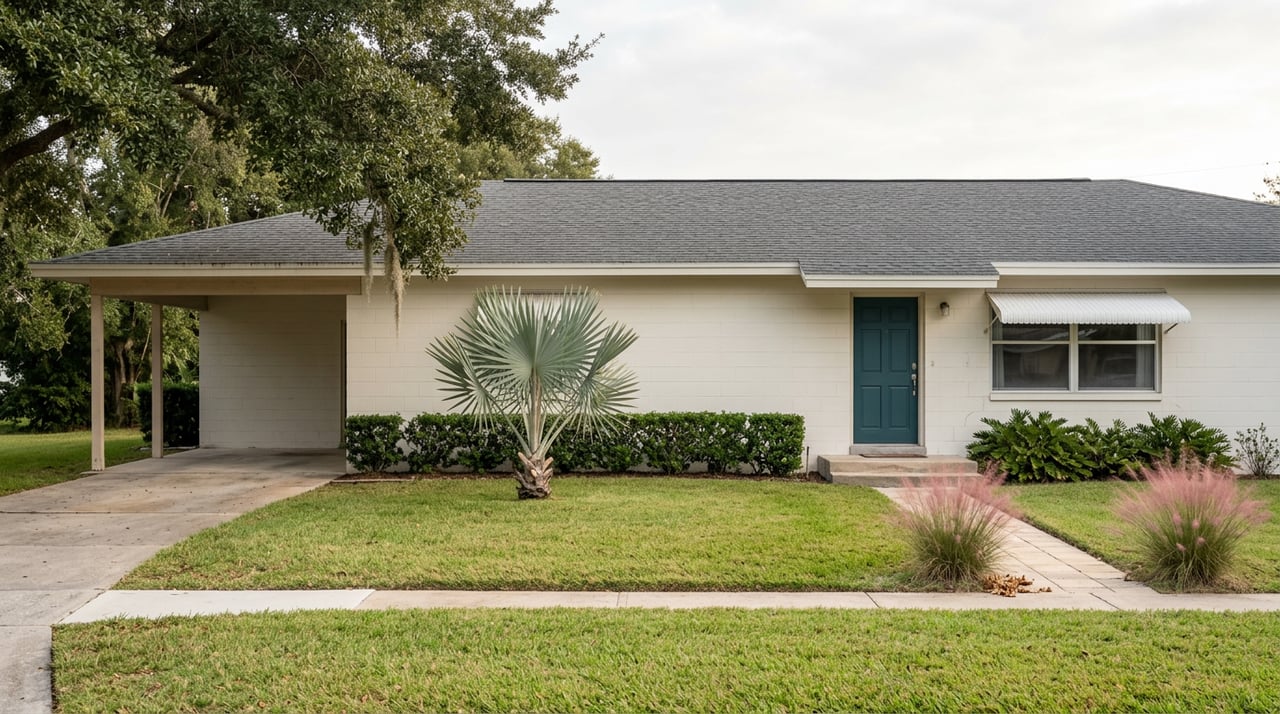
Why Snell Isle Renovations Keep Turning Into Teardowns
August 20, 2026
August 20, 2026
Ask most agents why so many Snell Isle listings are new construction instead of restored 1950s ranches, and you'll get an answer about taste: buyers want open floor plans, buyers want impact glass, buyers don't want to inherit someone else's kitchen. That's true, but it isn't the whole story. The bigger force at work is a city ordinance most buyers never think to ask about until they're already under contract, and it has nothing to do with style.
It's a number: 49 percent. And on an island where the majority of the housing stock predates modern flood codes, that number decides whether a renovation stays a renovation or becomes a teardown.
The City of St. Petersburg enforces what's known locally as the 49% Rule, formally the Substantial Damage and Substantial Improvement standard written into the city's Floodplain Management Ordinance. If the cumulative cost of repairs or improvements to a home in a flood hazard area reaches or exceeds 49 percent of the structure's pre-damage market value, the entire home has to be brought into full compliance with current flood elevation standards, not just patched back to where it was. That can mean lifting the house, adding flood venting, or rebuilding the foundation to meet today's base flood elevation.
Most of Snell Isle sits in FEMA's AE flood zone, which is why this rule matters here more than almost anywhere else in Pinellas County. It isn't a rare edge case triggered by a single catastrophic loss. It's a running tally.
Here's the part that catches people off guard. The 49% threshold isn't measured project by project. It accumulates. Repairs made after Hurricane Helene and Hurricane Milton in the fall of 2024, whether paid for out of pocket, through a homeowners policy, or through FEMA reimbursement, count toward that same cumulative total. So does any renovation permit pulled afterward, if it falls within the same window the city uses to link one project to the next.
That means a homeowner who spent a modest sum on drywall and flooring after the storms may have already used up a chunk of their compliance headroom, without realizing it, before they ever call a contractor about a kitchen. When they finally do pull a permit for that kitchen, the city adds the new project cost to the old one and checks the combined total against the home's pre-storm value. Cross 49 percent, and the whole house has to meet current elevation requirements, not just the room being remodeled.
The city has also stopped subsidizing the paperwork side of this. St. Petersburg waived permitting fees for storm-damage repairs after Helene and Milton, but that waiver ended on July 31, 2025. Anyone who put off filing is now filing at full cost, which is one more reason so many owners are choosing to solve the elevation problem once, permanently, with new construction, rather than repeatedly through a series of smaller projects that keep bumping against the same ceiling.
Snell Isle's median sale price sat near $1.5 million as of January 2026, and homes were spending an average of roughly 97 to 114 days on market in early 2026. Read on its own, that looks like a straightforward luxury market: high price, reasonably patient buyers. What it hides is that the number is no longer describing one market. It's describing two.
On one side are homes where the structure still has real value: sound elevation, updated systems, storm history that stayed well under the 49% line. On the other side are lots where the land has become worth more than the house sitting on it, and the listing price is really a teardown price with a building attached almost incidentally. A local design-build firm working on the island, Alexander² Construction, prices custom builds there at roughly $300 to $650 per square foot in 2026, while retrofitting an older home to meet current base flood elevation once the 49% threshold is triggered commonly runs $180,000 to $350,000 on top of whatever renovation the owner originally wanted. Once those two numbers are sitting side by side, the arithmetic usually favors starting over.
That split is also why vacant and functionally-vacant lots on the island's best streets have been trading close to seven figures before a single board is framed. Buyers aren't paying for a house. They're paying for the elevation, the address, and the freedom to build to code from the slab up.
| Path | Typical cost in 2026 | What you're actually buying |
|---|---|---|
| Elevate an aging slab home to current base flood elevation | $180,000 to $350,000 | Compliance alone, before the renovation you originally wanted |
| Teardown and rebuild at current code | $300 to $650 per square foot | A structure engineered for today's flood and wind requirements from day one |
If you're looking at an older listing on the island, the elevation certificate and the permit history matter more than the paint colors. Ask the seller's agent for both before you write an offer. FEMA's Flood Map Service Center will show you the flood zone panel for the specific address, and the city's Development Services office can tell you whether any storm-related permits are already on file for that property. That history follows the house, not the seller, so a fresh coat of paint over undisclosed repair work doesn't reset the counter.
The 97 to 114 day market window gives you room to do this properly instead of rushing. Use it. Snell Isle doesn't carry a mandatory HOA, only the voluntary Snell Isle Property Owners Association, which focuses on advocacy and neighborhood beautification rather than architectural review. That means there's no board checking a home's flood compliance history on your behalf before it hits the market. That job falls to you and your agent.
If you made storm repairs after 2024 and you're now planning a renovation, ask the city directly where your cumulative total stands before you finalize a scope of work. A contractor who works Snell Isle regularly will build that question into the very first conversation, and you should expect the same from anyone representing you on the sale side. Disclosing prior storm repair costs isn't just good practice, it directly affects what a buyer's contractor will tell them about their own renovation runway once they own the house.
There's a resiliency angle here too, and it cuts in the seller's favor when it's true. The city council approved a $1.6 million contract to replace the seawall along the 31st Avenue NE bridge into Snell Isle, a project Councilmember Ed Montanari had pushed for years before it finally moved forward. Infrastructure like that doesn't change a single property's flood zone, but it's a reasonable thing to mention to a buyer who's weighing the island's long-term commitment to its waterfront.
Does the 49% rule apply if I paid for storm repairs in cash instead of filing an insurance claim? Yes. The cumulative cost counts regardless of how it was paid, whether out of pocket, through insurance, or through FEMA reimbursement.
Does this only affect waterfront homes? No. It applies to any structure inside the city's flood hazard area, which covers most of Snell Isle, not only the homes directly on the water.
Where do I actually check a property's flood zone and permit history? FEMA's Flood Map Service Center will show the flood zone panel for a specific address. The City of St. Petersburg's Development Services office can confirm whether prior storm-repair or renovation permits are on file and how they've been counted.
Is the 49% threshold a one-time check or does it keep applying? It's cumulative and ongoing. Every new permit application gets measured against the home's history, not evaluated in isolation.
If you're weighing whether a specific Snell Isle property still has renovation room left in it, or whether the smarter move is buying land and building new, that's exactly the kind of question worth walking through with someone who watches this market daily. Becky McConnell and her team pull permit histories, flood zone data, and comparable teardown sales before a client ever writes an offer on the island. Get your instant home valuation to start the conversation with real numbers in hand.
Stay up to date on the latest real estate trends.

In real estate, every decision matters. With Becky’s strategic approach, you’ll have the insights and expertise needed to make informed moves that maximize your investment and achieve your goals in St. Pete’s dynamic market.