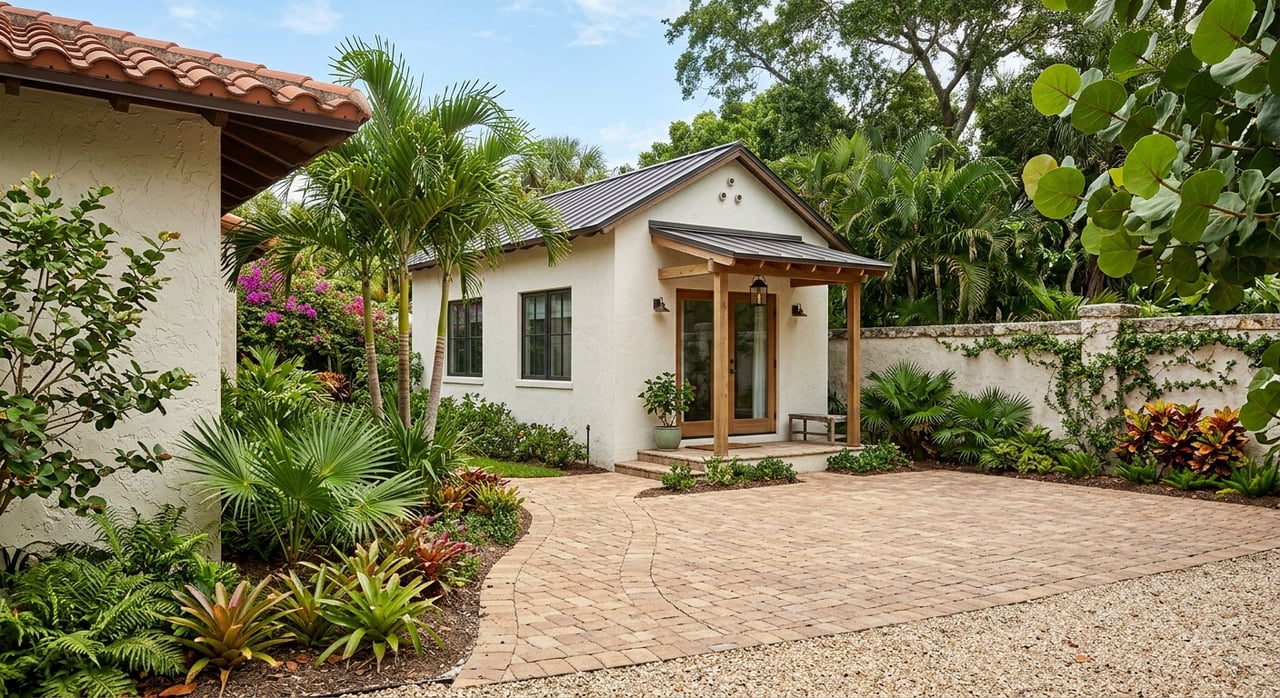
How Investors Look At Euclid St Paul Homes And Alley Units
April 23, 2026
April 23, 2026
If you are looking at Euclid St. Paul through an investor lens, it helps to stop thinking about square footage alone. In this part of St. Petersburg, lot layout, alley access, and zoning fit can matter just as much as the house itself. Whether you are considering a long-term rental, a house-hack, or a future rear-unit setup, understanding how investors evaluate these properties can help you spot the right opportunity faster. Let’s dive in.
Euclid St. Paul sits within St. Petersburg Police Patrol District 2, alongside other central-city neighborhoods near the urban core. That context matters because investors often view this area as an established in-town market where traditional lot patterns and rear access can create useful flexibility.
In practical terms, many buyers are not just asking whether a home looks updated. They are asking whether the parcel can support a smart long-term plan. A property with alley access, a detached garage, or enough rear-lot depth may offer more options than a similar home on a tighter or less functional site.
Before getting too far into finishes and renovation ideas, investors usually start with the basics of site function. In Euclid St. Paul, the first pass often comes down to how well the front home and any potential rear unit could coexist.
The city’s land development regulations and ADU materials point toward a development pattern that places garages, parking, and utility functions toward the rear, especially when alley access exists. You can review that framework in the city’s Neighborhood Traditional Mixed Residential intent language and parking and zoning provisions.
That means a strong investor candidate often has one or more of the following:
This is why two homes with similar price points can perform very differently from an investor standpoint. The better parcel is often the one with cleaner access and less need for major reconfiguration.
If you are considering a house-hack or rear-unit strategy, the front house still needs to live well. Investors typically look at entry paths, privacy, sight lines, noise transfer, laundry placement, storage, and whether adding or converting living space would create awkward circulation.
A property may look promising on paper but still fail the usability test if tenants or occupants would constantly cross paths in ways that feel inconvenient. A setup works best when the main home feels like a complete residence and the secondary space feels distinct.
Parking is a bigger part of the analysis than many buyers expect. The city’s code steers parking toward the alley or rear portion of the lot when possible, and residential subdivision standards note a 20-foot minimum right-of-way in new residential alleys with a 12-foot minimum paved width. You can see that in the city’s subdivision standards.
For investors, that affects more than convenience. Alley width and condition can influence construction access, daily parking function, and how practical a rear unit will be over time.
In Euclid St. Paul, alley units and ADUs can be part of the investment story, but not every parcel will qualify the same way. This is where city rules become especially important.
St. Petersburg defines an accessory dwelling unit as a secondary living unit with its own kitchen, bathroom, and sleeping area, either within the same structure or on the same lot as the primary detached single-family home. The city also describes ADUs as a recognized element of traditional neighborhoods in materials tied to the City Council agenda.
That matters because it confirms that ADUs are not an unusual exception in concept. They are a recognized housing type, but they still must meet specific standards.
A key update for investors is that the city increased the maximum ADU size to 800 square feet. The city also created a parking waiver for ADUs that are 600 square feet or smaller when they meet a specific set of conditions, including location near a high-frequency transit route, alley placement, alley-accessed parking for the main house, and no front-loaded driveway. Those details are outlined in the 2022 ADU text amendment.
For you as a buyer, this is a major distinction. A lot with alley access may be materially more attractive than a similar lot without it because the parking rules can be more workable.
One of the biggest mistakes investors make is assuming a neighborhood trend applies to every property. In reality, each parcel needs to be checked individually.
St. Petersburg’s official zoning GIS tools can help confirm zoning district, overlays, and parcel-specific information. The neighborhood-relations GIS layers can also help you review active code cases, homestead status, and other useful details before you write an offer.
Even when zoning looks favorable, other layers can affect feasibility. This is especially important if you are planning exterior work or a conversion.
If a property sits within a historic or archaeological preservation overlay, exterior work may require a Certificate of Appropriateness before work begins. The city’s code makes clear that certain work cannot move forward in those overlays without that approval through the zoning and overlay review process.
For investors, that does not automatically mean a deal is off the table. It simply means timeline, design review, and renovation scope may need closer attention.
The city’s Accessory Dwelling Handout notes that ADU standards do not override deed restrictions or HOA declarations. In other words, city approval is not the only hurdle.
That is why title review and covenant review should be part of your early feasibility work, not something saved for later in the contract period.
In Pinellas County, flood risk review should happen before you finalize your underwriting. According to Pinellas County flood mapping resources, everyone lives in a flood zone, and flood zones, evacuation zones, and storm surge maps each measure different risks.
For an investor, that means you should price in:
These costs can change the math quickly. A property that looks attractive on purchase price alone may become less compelling once insurance and resilience costs are added to the analysis.
In this niche, the highest-value upgrades are often the least flashy. Investors usually focus on the improvements that reduce friction for long-term occupancy and daily use.
The most useful renovation priorities often include:
These items directly affect whether the property can operate smoothly as a long-term rental or house-hack setup. Cosmetic updates can help marketability, but functional issues tend to drive the real investment risk.
If you are evaluating a Euclid St. Paul property with alley-unit or ADU potential, a disciplined checklist can save time and money. This is one area where investor success often comes from eliminating bad fits quickly.
Before moving forward, review:
The research tools and city layers above provide a strong starting point, but many buyers also benefit from working with the right professionals early in the process.
For this type of purchase, the most helpful team often includes:
In a neighborhood like Euclid St. Paul, nuance matters. The best opportunities are usually not the properties with the biggest promises. They are the parcels where lot geometry, alley access, regulatory fit, and renovation scope all line up in a realistic way.
If you are weighing an investment purchase in Euclid St. Paul or anywhere in St. Pete, working with a team that understands neighborhood-level detail can make your search much more efficient. Connect with Becky McConnell for local guidance on identifying properties with real potential and avoiding the ones that only look good at first glance.
Stay up to date on the latest real estate trends.

In real estate, every decision matters. With Becky’s strategic approach, you’ll have the insights and expertise needed to make informed moves that maximize your investment and achieve your goals in St. Pete’s dynamic market.