Euclid-St. Paul Isn't a Historic District. That's the Whole Story.
August 27, 2026
August 27, 2026
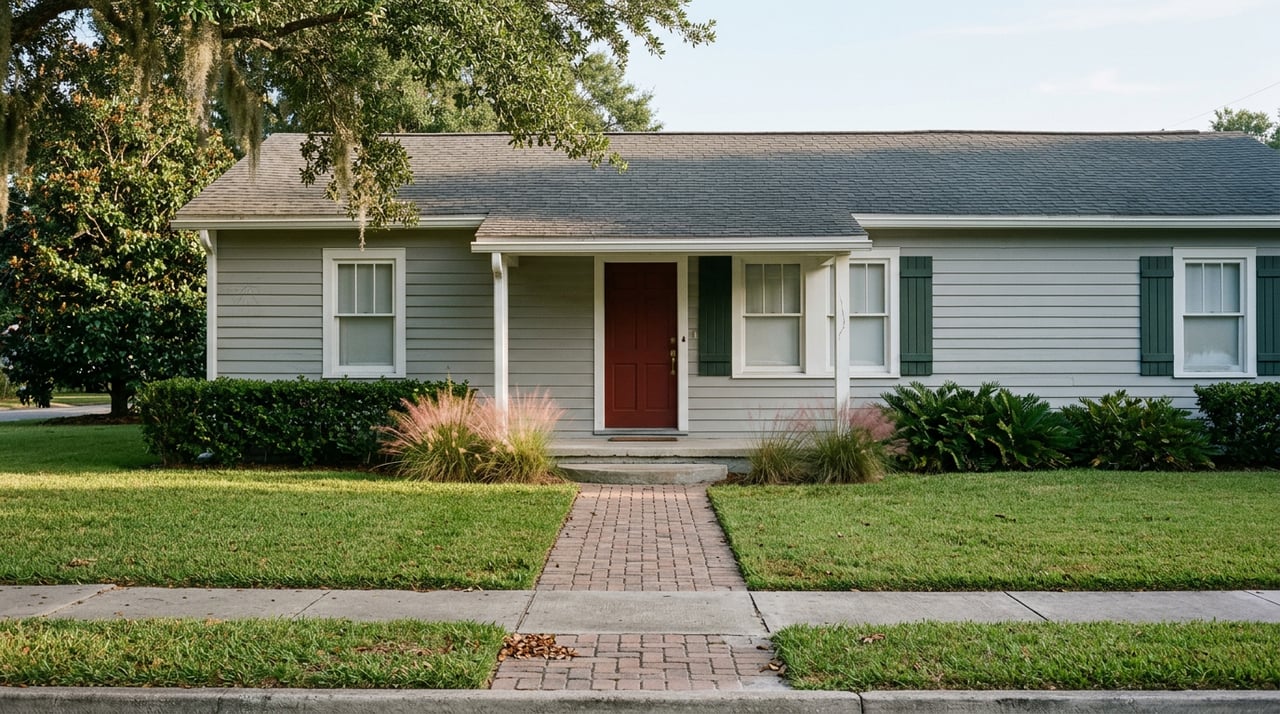
Two bungalows sit four blocks apart, both built in 1923, both wearing the same wide porch and deep eaves that define St. Petersburg's 1920s land boom. One owner wanted to swap her original single-pane windows for something more efficient. She pulled a standard permit, waited about a month, and had new windows in before the summer humidity set in. The other owner wanted the same thing. He's still waiting on a stamped Certificate of Appropriateness, four months in, because his house sits inside one of the city's locally designated historic districts and his aren't.
Same decade. Same city. Completely different rulebook. If you're comparing Euclid-St. Paul to Old Northeast or Kenwood on a spreadsheet of median prices and square footage, you're missing the variable that actually determines how your renovation goes.
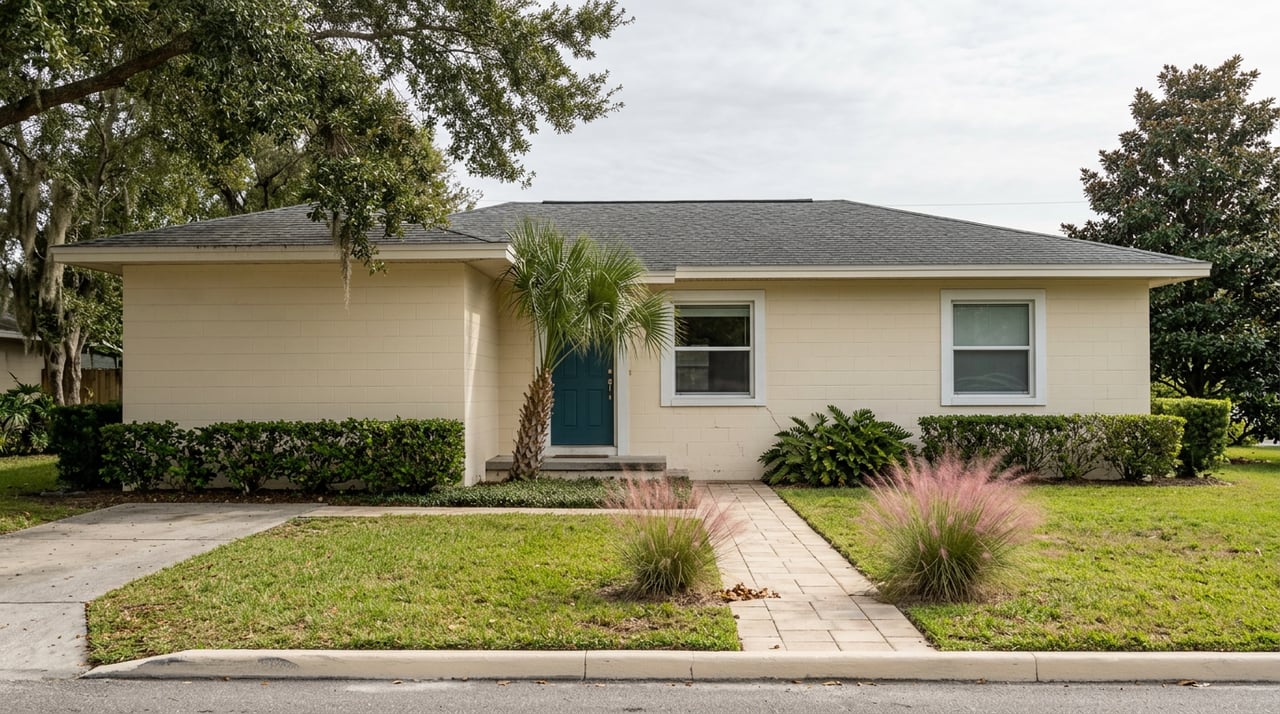
Euclid-St. Paul, sometimes called Euclid Place after its original 1920s name, is not a designated historic district. There's no overlay, no Historic Preservation Board review, no Certificate of Appropriateness requirement, and no restriction on exterior materials. A homeowner here can change a roofline, swap siding, or add a rear addition through the same standard building permit everyone else in the city uses. That permit typically clears the City of St. Petersburg's Development Services department in two to five weeks.
Historic Old Northeast tells a more complicated story, and it's a story worth getting right before you assume it applies to every house on every brick street. Most of Old Northeast sits on the National Register of Historic Places, which is largely honorary for residential owners and does not, on its own, trigger design review. But scattered inside that broader National Register footprint are pockets that carry local designation: Granada Terrace Historic District, several one-block districts, and ten individually designated landmarks. If your house falls into one of those, any exterior change visible from the street, a new window, a repainted masonry wall, a second-story addition, routes through a Certificate of Appropriateness review before you can pull a building permit.
The distinction matters because "historic neighborhood" on a listing sheet describes an era. Local designation describes a legal status. They are not the same thing, and only one of them determines how long your contractor is waiting on a phone call.
The city runs this review through its Community Planning and Preservation Commission. Minor changes can get staff-level approval fairly quickly. Anything that needs a full commission hearing waits for the next scheduled meeting, which is where the real time gets added. According to the Historic Old Northeast Neighborhood Association, the city's local landmark program has approved 97 percent of Certificate of Appropriateness applications since it began in 1987. The process isn't designed to say no. It's designed to make sure the answer, whatever it is, takes a while to arrive.
Local renovation contractors who work across both Old Northeast's designated pockets and its non-designated blocks put the practical buffer at two to four months for a project that needs commission review, and they estimate the added documentation, architect involvement, and period-appropriate materials push total project cost 20 to 40 percent above a comparable non-designated remodel. You can read how the city itself frames the Certificate of Appropriateness program directly from its planning and zoning office.
None of that applies in Euclid-St. Paul. A rear addition or a window swap there goes through the same intake as a kitchen remodel in a 1990s subdivision on the other side of town. No commission meeting to wait on. No documentation package proving your replacement window matches the original muntin profile.
Here's where the story gets more precise, and where a buyer who only skims the neighborhood description can get caught off guard. Local landmark status in St. Petersburg attaches to specific parcels, not zip code boundaries. A property inside Euclid-St. Paul can still earn individual landmark designation even though the neighborhood as a whole carries no overlay.
That's exactly what happened on the southern edge of Euclid-St. Paul. The former Pinellas Vietnamese Church of the Nazarene, at 1225 9th Avenue North, was purchased for $1.325 million in February 2025 by local investors Joshua and Danielle Neitz, who planned to convert the 75-year-old building into 20 workforce housing apartments. That October, the church was added to the St. Petersburg Register of Historic Places, which protected it from demolition but also meant its adaptive reuse plans needed a Certificate of Appropriateness before construction could begin. The Community Planning and Preservation Commission approved that COA along with exterior work covering new windows, doors, roof, and awnings, as St. Pete Rising reported when the project cleared review.
A locally designated landmark is tied to the parcel, not the neighborhood boundary. The address matters more than the zip code on the listing.
If you're evaluating a specific house in Euclid-St. Paul, the freedom from district-wide review is real, but it's worth a call to the city's Historic Preservation Office to confirm that particular address hasn't picked up its own individual designation. It's a five-minute check that can save you a very unpleasant surprise mid-renovation.
As of 2026, the trailing twelve-month median closed price in Euclid-St. Paul runs around $655,000, with active listings spanning the high $400,000s to nearly $1.8 million and homes typically moving in about 35 days, faster than the broader Pinellas County pace. Inventory stays thin, usually 10 to 15 active listings at any given time.
Compare that to Historic Kenwood, about a mile west, which skews toward a heavier concentration of craftsman bungalows and its own artist-enclave character, with medians running closer to $575,000. In Old Northeast, a solid three-bedroom two-bath is trading between $550,000 and $750,000 in 2026, with individual properties near North Shore Drive and Coffee Pot Boulevard reaching well past $1 million.
Buyers tend to read that price ladder as a story about lot size or distance to Beach Drive. Part of it is. But part of it is also what a dollar buys in flexibility. In Euclid-St. Paul, the renovation budget goes straight into the house. In Old Northeast's designated pockets, some of that same budget goes into architects, documentation, and a seat on the commission's calendar.
It's worth zooming out on how unusual Euclid-St. Paul's total freedom actually is among St. Petersburg's older neighborhoods. The city maintains eight locally designated historic districts, Granada Terrace and the Old Southeast Hexagon Block Preservation District among them, with most of the rest clustered in and around Old Northeast. Kenwood carries its own National Register designation covering roughly 2,203 buildings across 375 acres, though like most of Old Northeast, that status alone doesn't trigger COA review unless a specific property is also locally landmarked. Snell Isle has individually eligible homes scattered through it but no district-wide rule at all. Set against that landscape, Euclid-St. Paul isn't the exception because it's missing something. It's the exception because it never picked up the overlay the neighborhoods around it did.
Design freedom isn't the only thing that separates Euclid-St. Paul from its neighbors. The Euclid-St. Paul's Neighborhood Association, established in 1921, is one of the oldest continuously active neighborhood groups in the city, entirely volunteer-run. It hosts an Oktoberfest kickoff each fall, a ghost tour that's run since 2005 where costumed guides lead visitors through the streets telling local ghost lore, informal Friday front-yard gatherings, a holiday light event in December, and St. Paul's Catholic Church's four-day St. Paul Festival every April, a tradition that's been running for close to a century. General meetings happen the first Thursday of every other month in St. Paul's School cafeteria, doors open at 6:30 for anyone who wants to show up and ask questions in person.
The neighborhood's northeastern section, near 16th Street, also includes a mix of duplexes and small apartment buildings, a detail that matters if you're weighing a property with rental income potential. Combined with the absence of design-review friction, that makes small-scale investment renovation genuinely more straightforward here than in a district where every exterior change needs a commission's sign-off first.
If you're cross-shopping Euclid-St. Paul against Old Northeast or Kenwood, the neighborhood name on the listing tells you the era of the house. It doesn't tell you what your contractor is going to face once you own it. That question has one answer, and it's parcel-specific: call the city's Historic Preservation Office, ask whether that exact address carries local landmark status, and plan your renovation budget and timeline around the answer you get, not the assumption you walked in with.
If you're weighing Euclid-St. Paul against a designated district and want the real numbers behind a specific address, from permitting history to current comps, reach out to Becky McConnell directly, or start with a Get Your Instant Home Valuation to see where a property actually lands before you make an offer contingent on assumptions someone else's listing photo never confirmed.
Is Euclid-St. Paul a historic district? No. It's a historic neighborhood in the sense that its housing stock dates to the 1920s land boom, but it carries no local historic-district overlay, no Certificate of Appropriateness requirement, and no Historic Preservation Board review for renovations.
Do I need a Certificate of Appropriateness to renovate in Euclid-St. Paul? Generally no, since the neighborhood itself isn't locally designated. The exception is any individual property that has separately earned local landmark status, which is why it's worth confirming the specific address with the city before you finalize a renovation budget.
How does Euclid-St. Paul's pricing compare to Old Northeast and Kenwood? As of 2026, Euclid-St. Paul's trailing twelve-month median closed price runs around $655,000, above Kenwood's roughly $575,000 median and generally below Old Northeast's typical $550,000 to $750,000 range for a standard three-bedroom home, with Old Northeast's waterfront-adjacent properties reaching well past $1 million.
Stay up to date on the latest real estate trends.
In real estate, every decision matters. With Becky’s strategic approach, you’ll have the insights and expertise needed to make informed moves that maximize your investment and achieve your goals in St. Pete’s dynamic market.