Euclid-St. Paul Doesn't Need Flood Insurance. Your Insurer Still Wants a Look at the Panel.
September 10, 2026
September 10, 2026
Every listing description for Euclid-St. Paul repeats roughly the same line, usually in bold: Zone X, no flood insurance required. It's a real number. Policies in the AE and VE zones that ring most of coastal St. Petersburg run $1,500 to $4,000 a year, and a Euclid-St. Paul buyer simply doesn't write that check. What the listing doesn't mention is what happens two weeks later, when the same 1920s wiring that gives the house its character shows up on a 4-point inspection and the carrier wants a rewire before it will bind the policy at all. Zone X solves one insurance problem. It has no bearing on the other, and in this specific neighborhood, the other problem is the one that actually catches buyers off guard.
Euclid-St. Paul sits on some of the highest inland ground in urban St. Petersburg, and the FEMA Zone X designation that comes with it is not marketing gloss. It means no mandatory flood insurance for a financed purchase, no 49% Substantial Improvement rule capping what you can spend on a renovation before triggering elevation requirements, and none of the flood-zone math that shapes budgets in Shore Acres or Venetian Isles. That's a genuine structural advantage over most of coastal Pinellas, and it's worth the premium buyers pay to live here.
But Zone X answers exactly one question: how much water risk does this parcel carry. It says nothing about whether an insurance carrier will actually write you a policy, because that decision runs through a completely different document.
Any Florida home in the 25 to 30 year range triggers a 4-point inspection before most carriers, including Citizens, will bind or renew a policy. The inspection covers exactly four systems: roof, electrical, plumbing, and HVAC. It documents age, condition, and material, and it is not a safety inspection or a suggestion. It's the document an underwriter uses to decide whether to write the policy at all.
Age is the trigger, not location. A home in Euclid-St. Paul crosses that threshold the same way a home in any other 1920s St. Petersburg neighborhood does, and since the neighborhood's housing stock traces almost entirely to the 1920s land boom, nearly every purchase here is going to need one. The flood zone status that makes the neighborhood attractive has zero effect on whether the panel in the garage passes.
Electrical is where the inspection gets teeth. According to one Florida insurance agency that tracks underwriting decisions across the carriers it represents, Federal Pacific and Stab-Lok panels are rejected by 24 of the 26 carriers it works with, and Zinsco, Sylvania, and Challenger panels are rejected by more than 22 of the same 26. These aren't obscure brands. They were common installations in exactly the era Euclid-St. Paul was built out.
| Panel or wiring type | Typical era installed | Insurance stance | Typical fix cost |
|---|---|---|---|
| Federal Pacific / Stab-Lok | 1950s-1980s | Declined by most carriers, replacement usually required | $2,500-$5,000 for panel replacement |
| Zinsco / Sylvania | 1950s-1970s | Declined by most carriers | $2,500-$5,000 |
| Challenger | 1980s | Declined by most carriers | $2,500-$5,000 |
| Knob-and-tube wiring | 1880s-1940s | Declined outright by nearly every admitted carrier without a full rewire | $12,000-$36,600 depending on home size |
| Cloth-sheathed wiring | 1920s-1950s | Frequently flagged, coverage limited without rewire | Comparable to knob-and-tube rewire cost |
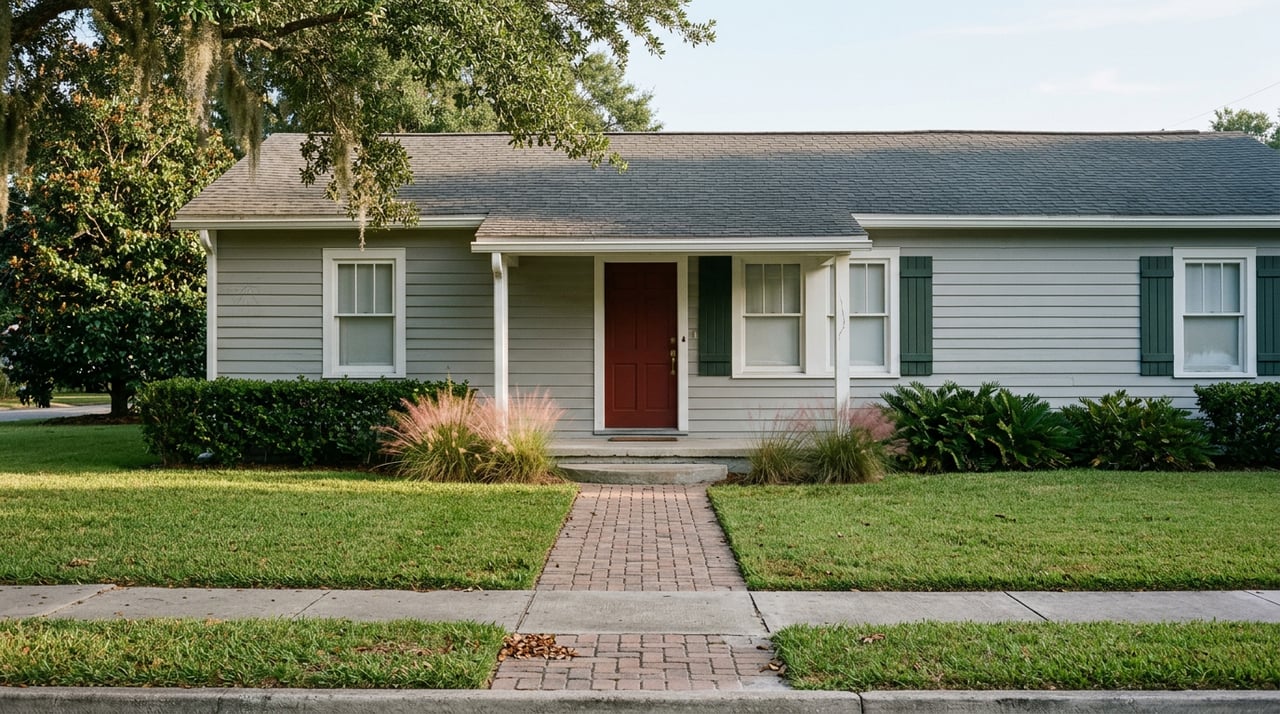
The neighborhood's dominant housing type is the 1920s Florida bungalow, with two-story craftsman homes, Colonial Revival, and Mediterranean Revival also represented throughout. Homes from that era were built with plaster over wood lath rather than drywall, and wired with knob-and-tube: porcelain knobs and tubes routing individual conductors, no ground wire, insulation that dries and cracks with decades of Florida heat.
Rewiring through plaster-and-lath is slower and more invasive than opening drywall. A contractor working specifically in this neighborhood puts a full rewire at $8,000 to $15,000 depending on home size and wall access, which sits at the lower end of the $12,000 to $36,600 national range for knob-and-tube replacement, likely because Euclid-St. Paul's bungalows tend to be smaller than the estate-scale homes that push that range higher elsewhere.
None of this is a flood risk. It's an age risk, and it's baked into the same housing stock that makes the neighborhood worth a premium in the first place.
A few questions belong in due diligence here that don't carry the same weight in a neighborhood full of 2010s construction:
Euclid-St. Paul's trailing 12-month median closed price runs around $655,000, with days on market averaging about 35, faster than the broader Pinellas County pace. That sits above St. Petersburg's citywide median, which was running in the $415,000 to $454,000 range as of mid-2026 depending on the data source. Buyers are paying for brick streets, downtown proximity under two miles, and a housing stock that's held its character for a century.
That premium is legitimate. It's also sitting on top of a home that, more often than not, is going to need either a documented clean bill on its wiring or a rewire budget layered into the purchase. The buyer who models the Zone X savings into their offer but doesn't model the electrical line item is comparing the wrong two numbers.
Newer construction in St. Petersburg, the kind going up west of downtown or in redeveloped corridors, simply doesn't trigger a 4-point inspection yet. A 10-year-old home isn't getting asked for one. Euclid-St. Paul's entire appeal, the brick streets and the 1921 neighborhood association and the century of continuous architecture, is inseparable from the fact that virtually every home here is old enough to require one. The neighborhood's charm and its insurance friction come from the same source.
That's the actual trade a Euclid-St. Paul buyer is making: real savings on flood insurance, paired with a near-certain electrical conversation that has nothing to do with water and everything to do with age. Understanding both sides of that trade, rather than just the half that gets bolded in the listing, is what separates a buyer who negotiates well from one who gets surprised at underwriting.
Does Zone X status exempt a home from needing a 4-point inspection? No. The 4-point requirement is driven by the home's age, typically 25 to 30 years, not by its flood zone. A Zone X home built in the 1920s needs one just like a coastal home of the same age would.
How do I find out what electrical panel a specific Euclid-St. Paul home has before making an offer? Ask the seller or their agent directly, and request any existing 4-point inspection report. If none exists, a licensed electrician or home inspector can identify the panel brand during a walkthrough, often before you're under contract.
If a home fails the electrical portion, is the deal dead? Not necessarily. Some carriers will bind a policy on the condition that a rewire is completed within roughly 30 days of closing, provided you have a signed contractor quote in hand. It's a workable path, but it only works if you know about it before you're at the closing table, not after.
If you're weighing Euclid-St. Paul against another St. Pete neighborhood and want the full picture, insurance line items included, Becky McConnell can walk you through what a specific address is actually going to cost to insure before you write an offer. Reach out for an instant home valuation and a straight answer on what you're really buying.
Stay up to date on the latest real estate trends.
In real estate, every decision matters. With Becky’s strategic approach, you’ll have the insights and expertise needed to make informed moves that maximize your investment and achieve your goals in St. Pete’s dynamic market.